
Last updated October 16, 2026
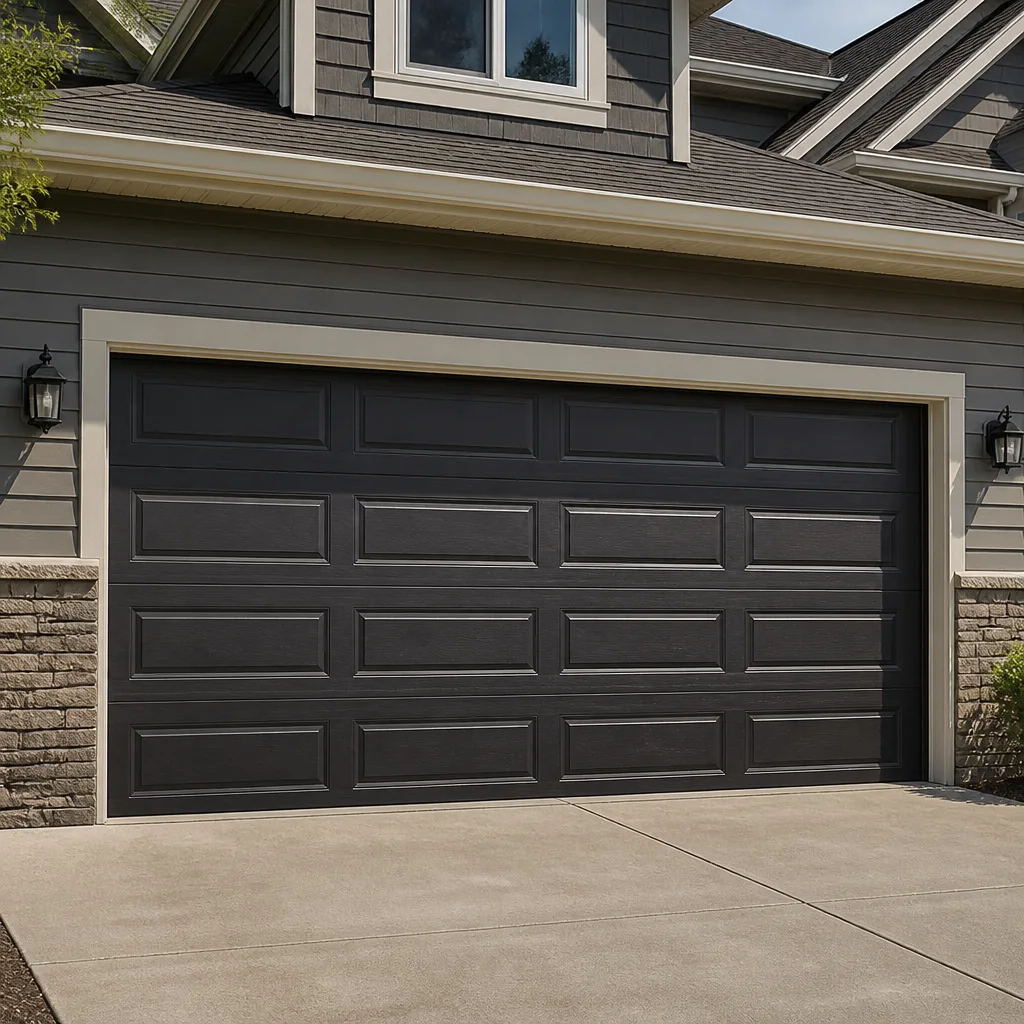 Raised-panel steel
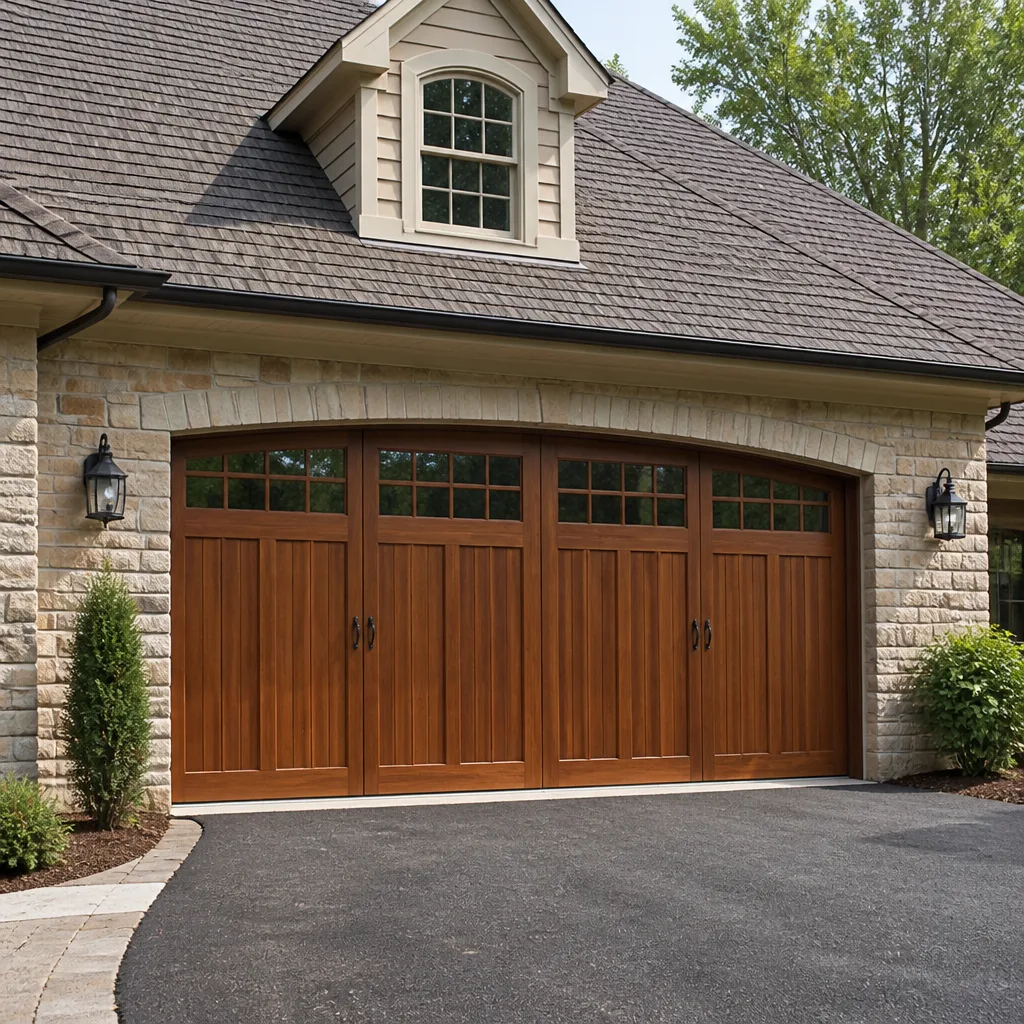 Carriage house
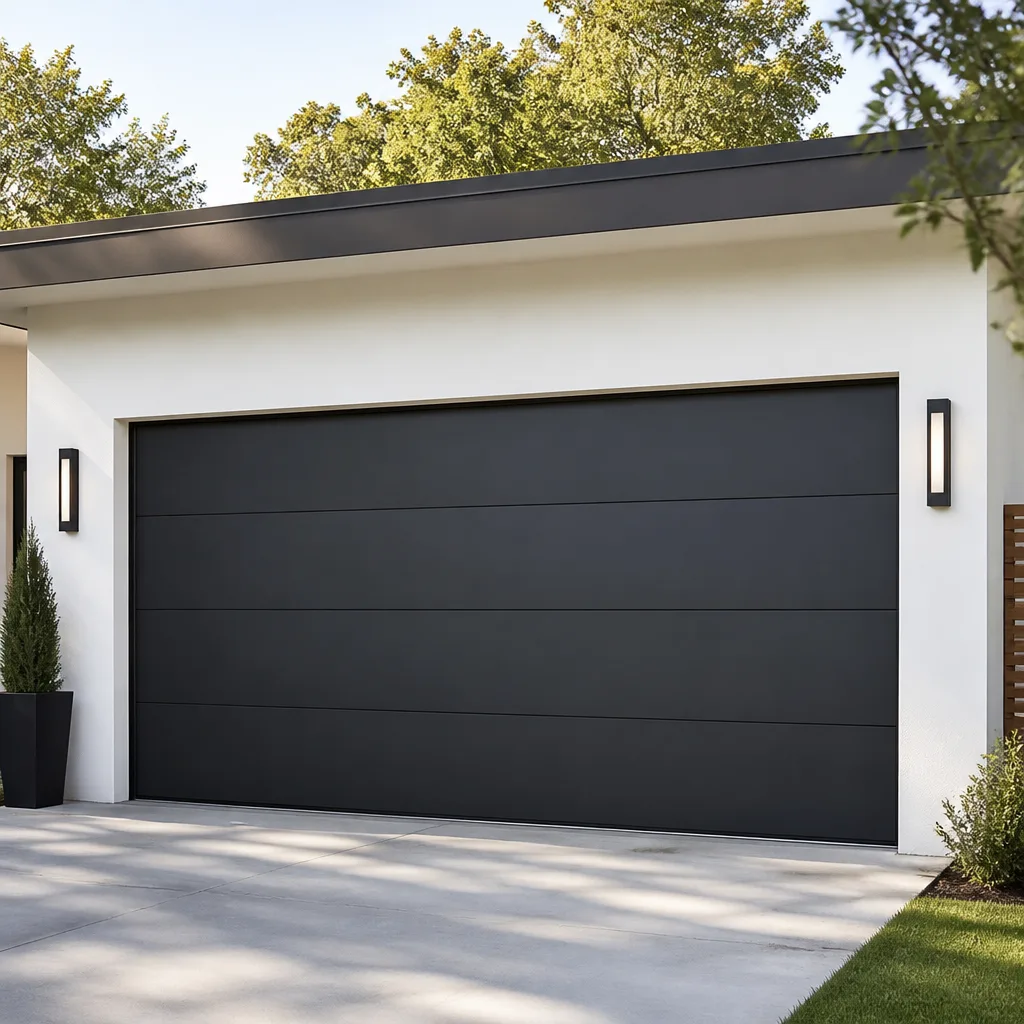 Modern flush
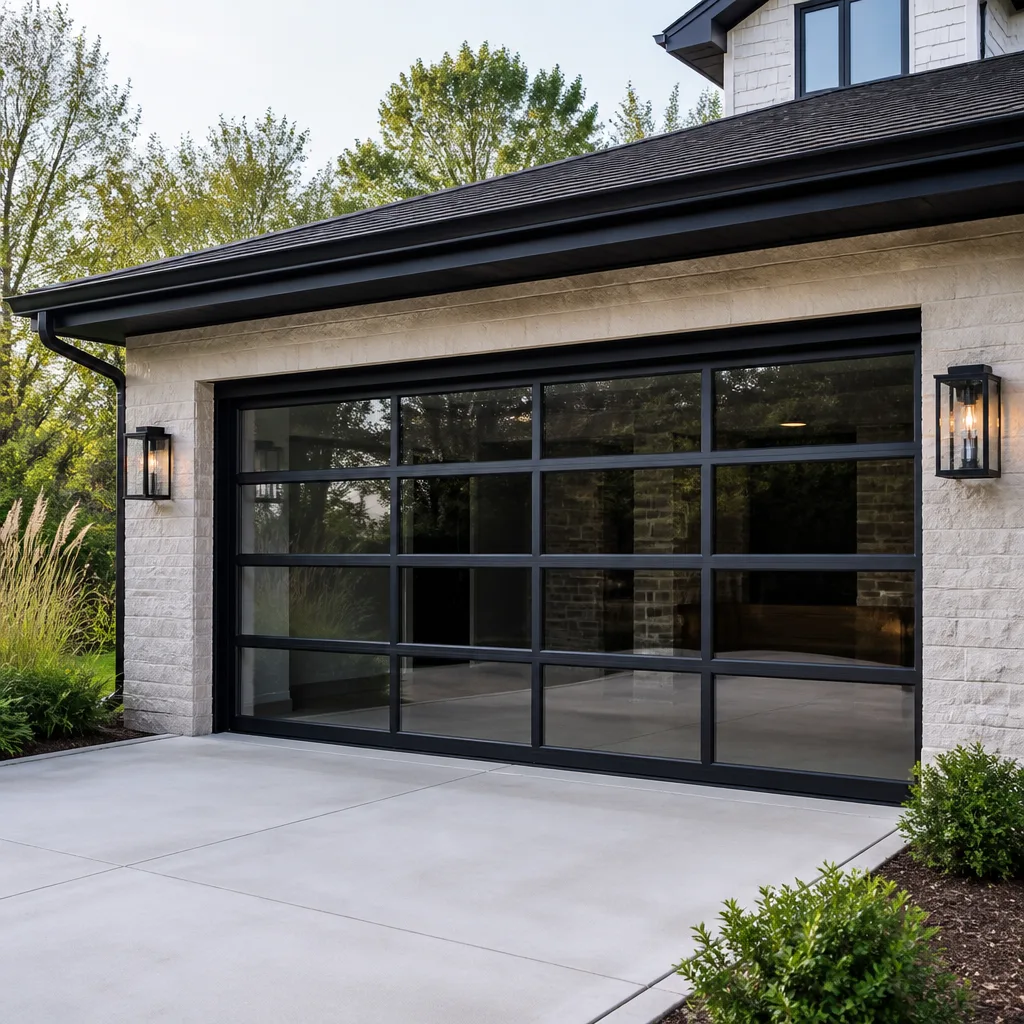 Full-view glass
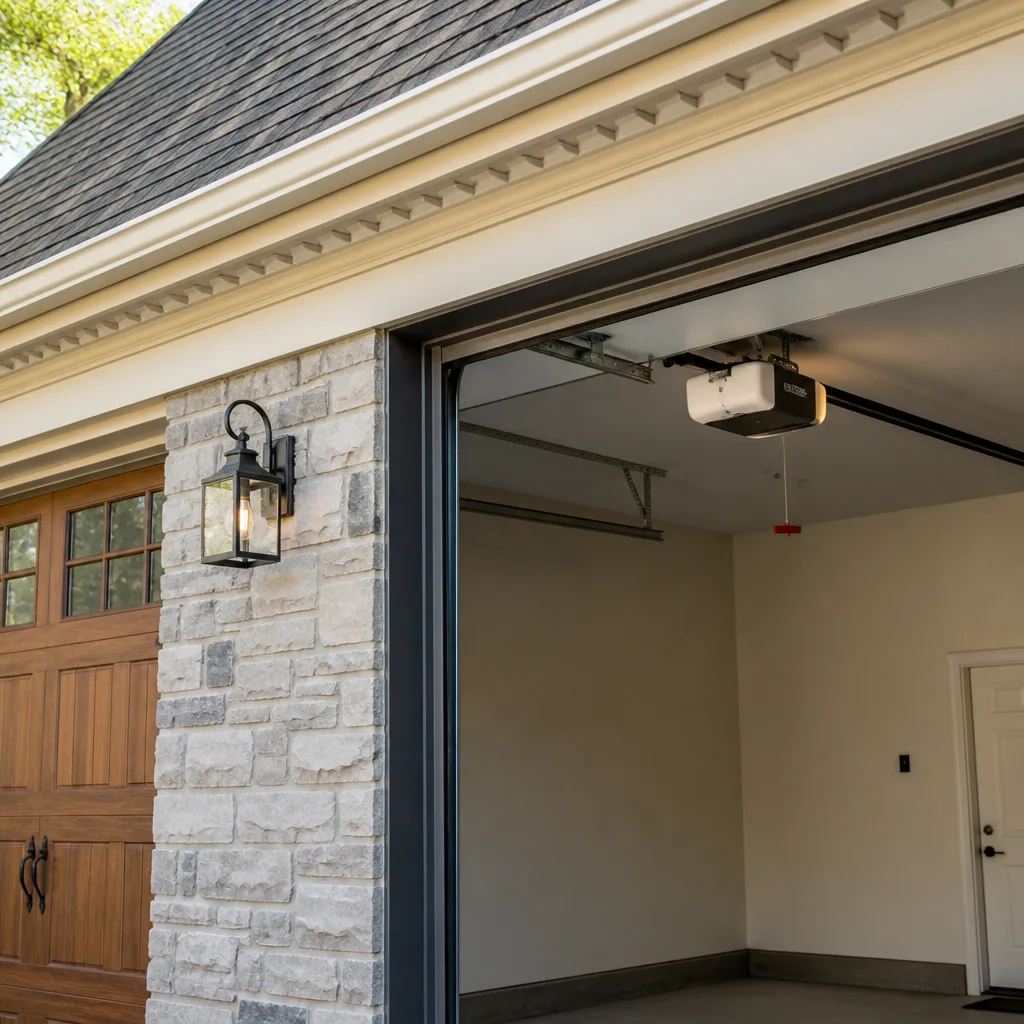 LiftMaster openers
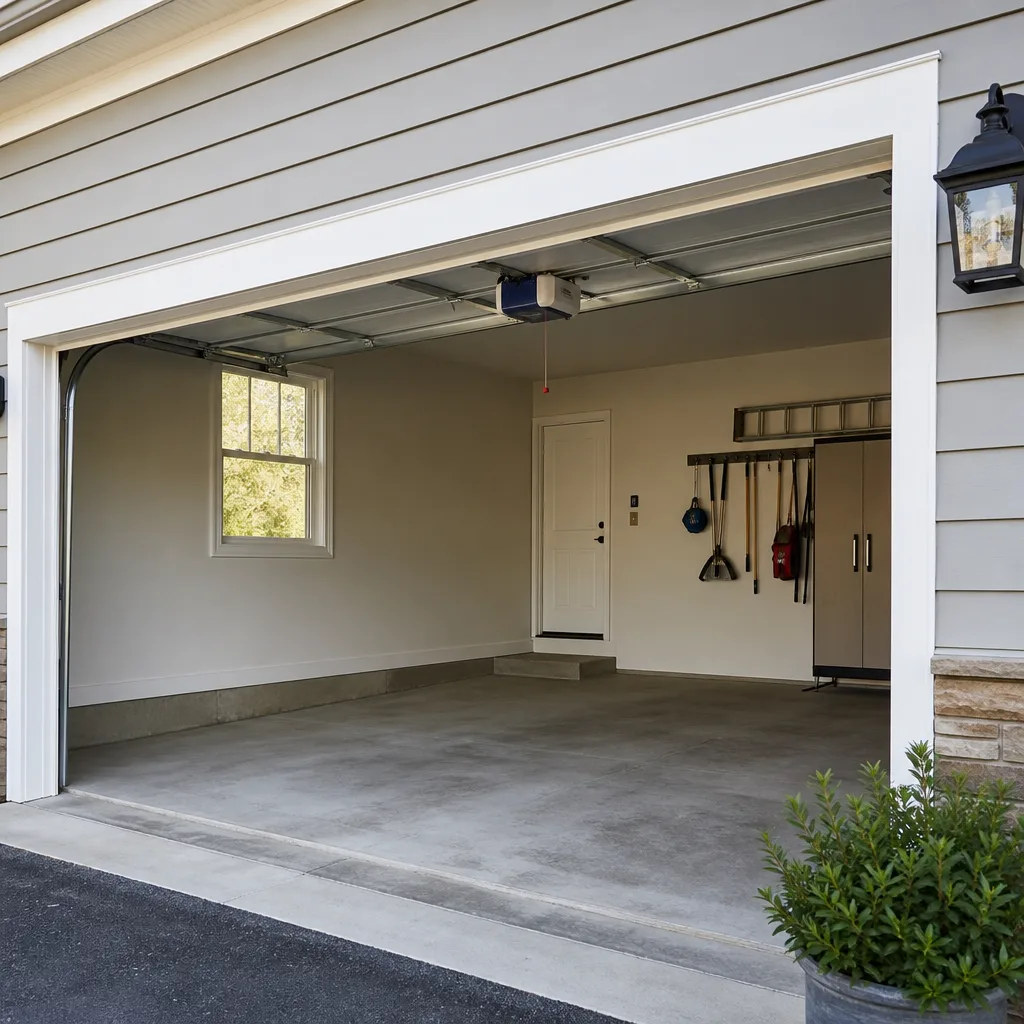 Chamberlain openers
Full 25-point door and opener safety check with every visit - springs, cables, rollers, tracks, and your LiftMaster or Chamberlain opener included
You get a price before we start. It does not change when the truck arrives.
Get your free estimateDIY vs Professional Garage Door: The Alpharetta Homeowner’s Decision Guide
Torsion springs store enough energy to break a wrist or worse. That’s not a scare tactic – it’s the reason YouTube has thousands of garage door tutorials and hospital ERs see the people who watched them. This guide walks you through exactly which garage door tasks an Alpharetta homeowner can handle safely, which ones demand professional training, and what the real cost difference looks like when you factor in time, tools, warranties, and the cost of getting it wrong. We’re writing this from the floor of a working Alpharetta garage door company, because we’d rather you know the truth before you touch a winding bar.
Styles & brands we work with
Quick Answer
For most Alpharetta homeowners, the safe DIY zone covers five tasks: sensor realignment, lubrication, weather seal replacement, opener programming, and visual inspections. The professional-only zone has one absolute line: torsion spring work, because the stored energy in a wound spring is not a skill problem – it’s a physics problem. Everything else falls in a gray area that depends on your tools, your time, and whether you’re willing to carry the risk of a voided warranty on a botched fix.
Table of Contents
- The Physics of Torsion Springs: Why This Task Is Different
- What Alpharetta Homeowners Can Legitimately Handle
- What Requires Professional Tools and Training
- The Real Cost Comparison: DIY vs Professional
- What Happens When a DIY Repair Fails
- How to Work With a Professional Efficiently
- Common Mistakes to Avoid
- When to Call a Professional
- Frequently Asked Questions
- The Bottom Line
The Physics of Torsion Springs: Why This Task Is Different
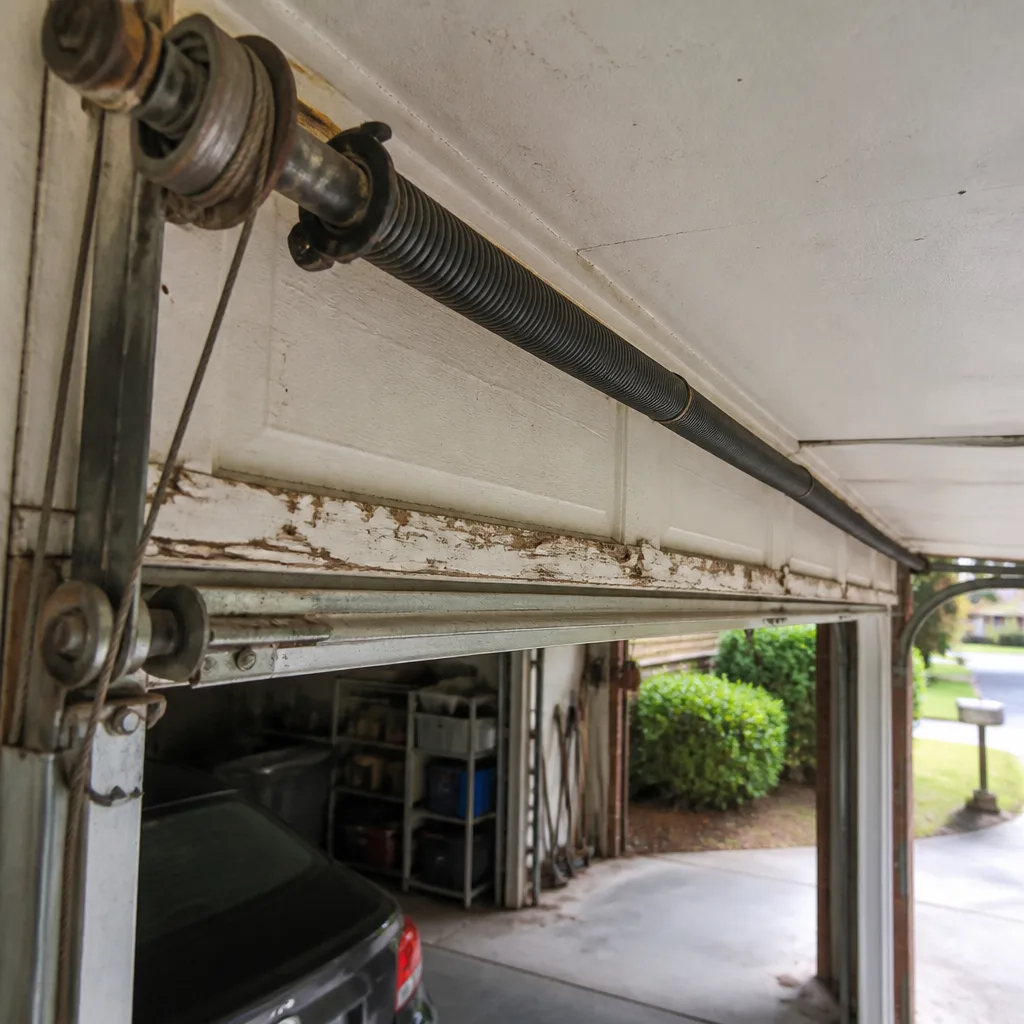
A torsion spring – the thick coiled spring mounted above the door that bears most of the lifting load – is under constant tension even when the door is closed. That tension represents stored energy. A typical residential torsion spring holds somewhere between 50 and 150 foot-pounds of torque, depending on door weight and spring size. That energy has to go somewhere when the spring unwinds, and if your hand is in the way, the spring doesn’t care.
We say this plainly because most DIY garage door disasters in Alpharetta start with an incorrect assumption: that a broken spring is a bigger version of a broken shelf bracket. It isn’t. A snapped spring releases its energy all at once. A partially wound spring being adjusted by an untrained hand can release energy unpredictably. The winding bars used to adjust these springs are specifically designed to bear that torque. A screwdriver or socket extension is not.
The numbers from hospital data back this up. Garage door springs account for a measurable share of ER visits each year involving hand and forearm injuries, and the injuries tend to be severe: crushed fingers, broken wrists, deep lacerations, and facial impacts. No other component on a residential garage door carries this injury profile. Not the tracks, not the cables (though cables carry their own risk when under spring tension), not the opener motor. The spring is the one part where the downside of a mistake is not a misaligned door – it’s a life-altering injury.
There’s also a compounding mechanical risk: the cables. When a spring breaks, the garage door cable repair need often follows, because the sudden release of spring tension can snap a cable or throw it off the drum. A homeowner who replaces the spring without addressing the cable condition has fixed half the problem while standing next to a loaded one.
This is the one task where the DIY-versus-professional question isn’t really a question. It’s a categorical line. We draw it firmly because we’ve responded to enough Alpharetta homes where a well-intentioned DIY spring attempt left a door half-engaged, a cable frayed, and a homeowner holding a winding bar they never want to touch again.
What Alpharetta Homeowners Can Legitimately Handle
The safe DIY zone exists, and it’s broader than most people think. These are tasks that require no spring tension work, no cable work, and no specialized tools beyond what a typical Alpharetta household already owns. They’re also the tasks that make up most routine garage door maintenance, which means a homeowner who handles them saves money without taking on real risk.
1. Photo Eye Sensor Realignment
The two photo eye sensors near the bottom of each door track drift out of alignment over time, especially in Alpharetta where clay soil shifts and door tracks flex with temperature swings. The fix requires a screwdriver or wrench, a level, and about ten minutes. Loosen the mounting bracket, align the sensor lights so both glow steadily, tighten the bracket. No spring, no cable, no risk.
2. Lubrication
A can of garage door lubricant – not WD-40, which displaces moisture but doesn’t lubricate – costs about $12 at any Alpharetta hardware store. Apply it to the hinges, rollers, springs, and the opener rail. Do this twice a year. It takes fifteen minutes and extends roller and hinge life. What it does not do is fix a spring, quiet a failing roller bearing, or resolve an opener motor that’s working too hard. It’s maintenance, not repair.
3. Weather Seal Replacement
The rubber strip along the bottom of the door and the weatherstripping along the frame break down in Georgia humidity and sun. Replacement T-seals and frame seals cost $30 to $70 and install with basic tools in under an hour. This matters more in Alpharetta than people realize: our damp springs and hot summers mean a bad bottom seal invites mildew, pests, and higher cooling bills into a garage that’s already fighting moisture.
4. Opener Programming and Remote Syncing
Programming a remote, syncing a keypad, clearing old codes, or adjusting travel limits through the opener’s control panel are homeowner tasks. The garage door opener repair line blurs only when the opener’s logic board fails, the gear strips, or the motor’s capacitor goes. Those are internal repairs, not programming.
5. Visual and Functional Inspections
Once a month, look at the door with the opener disengaged. Does it lift evenly? Does it stay in place when opened halfway? Do the cables look tight and seated? Are the rollers worn to the point where the wheel wobbles on the stem? Catching problems at this stage makes professional repair cheaper and shorter.
These tasks share a common trait: the failure mode is inconvenient, not dangerous. A misaligned sensor makes the door reverse. A worn seal lets in a draft. A dead remote battery means you use the wall button. None of these failures sends you to the ER.
What Requires Professional Tools and Training
The professional zone isn’t about gatekeeping. It’s about tasks where the required tools are specialized, the failure mode is dangerous, or the diagnosis genuinely isn’t visible until you’ve disassembled part of the door. Here’s the task-by-task split.
Torsion Spring Replacement – Professional Only, No Exceptions
Covered above, but worth restating: this is the one task that makes the entire DIY conversation irrelevant. Winding a torsion spring requires winding bars sized to the spring, a full understanding of the door’s weight and balance, and the mechanical sense to know what a properly wound spring feels like. Get the spring size wrong – and there are dozens of wire sizes and lengths – and the door doesn’t balance. Get the winding wrong and the spring unwinds on you. We train technicians on this exact procedure, and even experienced techs treat a wound spring with the same respect an electrician treats a live panel.
Cable Replacement and Re-tensioning
Garage door cables run under the tension of the springs. A cable that snaps or jumps off the drum while a spring is wound becomes a projectile risk, and re-seating the cable correctly almost always requires dealing with spring tension. This is why cable work belongs in the professional column. It’s listed separately from spring work on most service menus – here’s the breakdown for Alpharetta: the cable repair service in Alpharetta typically includes drum inspection, cable re-seating or replacement, and a full balance test afterward.
Track Repair and Realignment
Door tracks guide roughly 150 to 300 pounds of moving steel and glass. A track that’s out of alignment puts uneven load on rollers, hinges, and the opener – and it’s often the quiet cause of a door that’s loud, labored, or stopping mid-travel. Bending a track with pliers or shims is a common DIY move that makes the problem worse. Proper track work means measuring the reveal at multiple points, adjusting brackets, and knowing when a track section is beyond straightening.
Opener Motor and Gear Replacement
When the opener’s internal gear – the nylon or plastic gear that transfers motor torque to the chain or belt – strips, the motor runs but the door doesn’t move. Replacing it means opening the powerhead, and the replacement parts are brand and model-specific. We carry internal parts for LiftMaster, Chamberlain, Genie, and Raynor openers on the truck because the right gear for a LiftMaster 8500 is not the right gear for a Chamberlain B970. A homeowner ordering parts online often waits a week for a part that may not match the powerhead revision.
Door Panel Replacement
A single damaged panel can sometimes be replaced without replacing the whole door – but panel dimensions, color codes, and insulation values vary by manufacturer and model year, and a mismatched panel creates an unbalanced door if the weight differs. It’s also heavy work. A double-car garage door panel can weigh 80 to 120 pounds, and maneuvering it into the track at height is a two-person job with a real crush-risk component.
The Real Cost Comparison: DIY vs Professional
The honest cost conversation starts with a number DIY guides don’t mention: your time. In Alpharetta, where a two-person household typically has both adults working, a Saturday spent diagnosing, sourcing parts, and executing a repair isn’t free. The comparison below uses typical market ranges for the Alpharetta area.
| Task | DIY Parts Cost | DIY Time Investment | Professional Cost (Alpharetta range) | Professional Warranty |
|---|---|---|---|---|
| Weather seal replacement | $30 – $70 | 1 – 2 hours | $95 – $150 | Often 90 days, some companies 365 days |
| Sensor realignment | $0 (tools on hand) | 10 – 20 minutes | $75 – $125 (service call) | 365-day written guarantee if done by a quality shop |
| Cable replacement (single) | $25 – $60 (parts) + specialty tools | 3 – 5 hours + learning curve | $150 – $275 | 365 days written |
| Torsion spring replacement | $60 – $140 (spring + winding bars) | Not recommended – high injury risk | $180 – $340 per spring, $260 – $520 for a pair | 365 days written |
| Opener motor replacement | $180 – $400 (unit only, brand-dependent) | 4 – 8 hours including programming | $250 – $450 installed | Typically 1 – 5 years on the unit |
The DIY savings on cable work, for example, look like $100 to $200. But that assumes you already own the winding bars or equivalent tools, you get the diagnosis right on the first try, and you don’t injure yourself or damage a second component. Miss the diagnosis – replacing what looks broken while missing what’s actually broken – and the DIY savings vanish into the cost of the professional repair you needed anyway, now on top of the parts you already bought twice.
The warranty factor is the quiet difference-maker. A professional repair at Brock Garage Doors Alpharetta carries a written 365-day guarantee: if the covered repair fails within that full year, we return and correct it at no charge. Your repair is covered in writing for 365 days – if it fails in that window, we return at no charge. There’s no DIY version of that. When you do the work yourself, you’re the warranty department, and a failed DIY repair has already demonstrated what that costs.
What Happens When a DIY Repair Fails
Failed DIY garage door repairs in Alpharetta tend to follow a pattern. We know because we get the calls. Here’s what a botched attempt actually costs, beyond the parts.
Voided Manufacturer Warranties
If your garage door or opener is still under manufacturer warranty – and many Alpharetta homes have openers and doors under ten years old – that warranty typically requires installation and repair by a qualified technician. LiftMaster, Chamberlain, Genie, and Clopay all have warranty language that excludes damage or malfunction caused by improper repair or modification. A homeowner who opens the powerhead on a Chamberlain opener and strips the gear further has, in effect, voided the warranty on that unit. The manufacturer isn’t paying for the resulting repair.
Insurance Claim Complications
If a failed DIY repair leads to property damage or injury, your homeowner’s insurance may push back. Insurance policies cover sudden and accidental events. A garage door that crashed because a spring was improperly wound, or a cable was incorrectly seated, sits in a murkier category. Some insurers treat repair-related damage as negligence, and negligence is often excluded or raises premiums. We’re not insurance adjusters, but we’ve watched Alpharetta homeowners fight this exact fight after spring and cable DIY attempts.
The Compounding Cost of a Secondary Repair
This is the biggest hidden cost, and it’s specific to garage doors. When one component fails and is improperly repaired, the imbalance often damages a second component. A poorly wound spring puts uneven load on cables and rollers. A misaligned track destroys rollers. A door that was never balanced after a spring replacement strips the opener’s internal gear inside a month. So the homeowner’s “saved” $200 becomes a $200 parts bill, a $150 cable job, and a $300 opener gear replacement. The door doesn’t know who fixed it; it applies force the same way either time.
One Alpharetta call we took last summer started with a homeowner who replaced his own spring, skipped the balance test, and called us three weeks later because the door was grinding. The spring was the wrong wire size for the door weight, and it had burned out three rollers. The professional visit cost him more than the original professional spring replacement would have, because it included garage door repair in Alpharetta on top of the spring correction. That’s the compounding loop in one example.
How to Work With a Professional Efficiently
If you’ve decided a repair belongs in professional hands, here’s how to make the call efficient – and how to know you’re working with a shop that runs to a standard, not a hope.
- Know your door’s brand and approximate age. Look for the manufacturer sticker on the door panel or the opener head. If you know it’s a Raynor door from the 2010s, or a Genie opener that came with the house, say so. It helps the technician bring correct parts on the first visit.
- Describe the symptom precisely. Not “it’s broken” – describe what you observe: “the door opens six inches and reverses,” “it squeals when closing,” “the left cable is hanging loose.” Precise symptoms save a diagnostic trip.
- Ask for a written price before work starts. This is the single best filter for a quality shop. A company that gives a verbal range and then presents a different number on the invoice is one you should reject. At Brock Garage Doors Alpharetta, the written price is handed over before any work starts. The number on the invoice matches the number you approved. Every time.
- Read the written quote and ask about anything unclear. A good shop will explain the line items in plain English. “Torsion spring replacement: $X” or “cable re-seat: $Y.” If you don’t understand a line, ask. If the answer is defensive, walk away.
- Confirm the warranty in writing. Ask what the guarantee covers and for how long. If the answer is “oh, we stand behind our work” without a written term, that’s not a guarantee. That’s a feeling. A real shop puts the term in writing: 365 days, if it fails, we return at no charge.
- Let the tech do the post-repair balance test. After any spring, cable, or track work, a qualified technician will run a balance test: disconnect the opener, manually lift the door, and check it holds at mid-height. Watch for this step. It’s the difference between a correction and a cleanup.
One more note for Alpharetta specifically: our service calls involve basements and second-story garages more often than people expect, and the humidity means rust on hardware is common. A technician who knows the local housing stock and climate diagnoses faster. That’s not a sales pitch for us – it’s a reason to use any established Alpharetta shop over a national call-center brand with a contractor who’s driving in from an hour away.
Common Mistakes to Avoid
- Using the wrong lubricant. WD-40 is a solvent, not a garage door lubricant. It cleans, then leaves the metal dry, which accelerates wear. Use a silicone- or lithium-based garage door lubricant. In Alpharetta’s humid summers, the wrong product attracts dust and gums up rollers fast.
- Replacing one spring instead of both. If the door has two torsion springs and one fails, the other is at the end of its rated life. Replacing only the broken one typically costs more in the long run, because the second spring fails within months and you pay for a second service call. This applies in Alpharetta homes with double doors especially, where the load distribution matters more.
- Using a screwdriver or rebar as a winding bar. Improvised winding tools bend under torque and slip. The slip is the injury. If you’re winding a spring – which we recommend against – using the wrong tool takes a very risky task and makes it reckless.
- Skipping the balance test. After any spring or cable work, the door should be balanced. Lift it manually to half height. If it drifts up or down, the spring tension is wrong. An unbalanced door destroys openers, rollers, and hinges within months.
- Ordering parts by price instead of specification. Torsion springs are sized by wire gauge, inner diameter, length, and wind direction (left or right). Ordering the cheapest spring or the first one that looks similar often means an unbalanced door. This is the most common parts-ordering mistake we fix in Alpharetta.
- Ignoring the door’s symptoms because “it still works.” A door that’s loud, shakes, or opens slowly is telling you something is wrong. Waiting until it fully fails is not maintenance – it’s gambling, and the repair is always more expensive after a full failure than a partial one.
- Using the door as a primary entrance while it’s malfunctioning. If the door opens inconsistently or the cables look slack, don’t use it for daily coming and going. A door that fails mid-cycle while you’re underneath it isn’t worth the saved thirty seconds to walk around the side.
When to Call a Professional
Call a professional if the spring is broken or visibly cracked, if a cable is frayed or off the drum, if the door is unbalanced or grinding, if the opener motor runs but nothing moves, or if any repair involves working with the door’s stored tension. These conditions share one trait: the failure mode is dangerous or the diagnosis requires disassembly. Don’t guess. Our technicians have seen enough DIY attempts in Alpharetta to know that the first call is always cheaper than the cleanup call. Brock Garage Doors Alpharetta offers free estimates in Alpharetta – call (229) 404-6747 and a live person answers, day or night, holidays included.
Frequently Asked Questions
You can safely handle photo eye sensor realignment, lubrication with the right product, weather seal replacement, opener programming and remote syncing, and monthly visual inspections. These five tasks require no spring or cable work and no specialized tools. Everything involving torsion springs, cables under tension, track alignment, or opener internals belongs in professional hands.
Most torsion spring replacements in Alpharetta run $180 to $340 per spring, with a pair typically costing $260 to $520 installed. The exact price depends on the spring’s wire size, length, and whether the door requires one or two springs. At Brock Garage Doors Alpharetta, the written price is provided before any work starts, and the repair is covered in writing for 365 days. Call (229) 404-6747 for an exact quote – estimates are free.
For the five safe DIY tasks, yes – you’ll save $75 to $150 per job and take on minimal risk. For spring, cable, track, or opener motor work, no – the true cost of a failed DIY repair includes voided manufacturer warranties, possible insurance complications, and secondary damage to components that weren’t broken before. The savings mathematically disappear when the DIY fix needs a professional correction.
If your DIY repair fails, you’re responsible for the cost of correcting it, and the manufacturer warranty on your door or opener may be void if the failure is tied to improper repair. You also carry the cost of any secondary damage – a badly wound spring can destroy rollers, cables, or the opener gear. A professional repair carries a written warranty that makes the repair company responsible, not you.
Look for three things in writing: a price quote before work starts, a clear explanation of what the repair includes, and a written warranty with a defined term. If a company can’t put those three things on paper, don’t hire them. Brock Garage Doors Alpharetta runs on written pricing, plain-English line items, and a 365-day guarantee on every repair – no exceptions, no verbal promises.
We service LiftMaster, Chamberlain, Genie, Clopay, Amarr, Wayne Dalton, Craftsman, and Raynor systems, and our technicians are trained on all eight brands. We carry common opener parts on the truck, which means most opener repairs in Alpharetta are completed on the first visit. A live person answers at (229) 404-6747 around the clock.
The Bottom Line
The DIY-versus-professional question for garage doors resolves to one clear line: sensor alignment, lubrication, seals, and programming are homeowner work; torsion springs, cables under tension, track problems, and opener internals are professional work. The deciding factor isn’t your skill level – it’s the physics of stored energy and the compounding cost of failure. Professional repair costs more upfront and less in the long run, because the warranty transfers the risk away from you, and the diagnosis is right the first time. Bookmark the safe tasks. Call a pro for the rest. The door will work harder for you either way, but only one path keeps your hands intact and your warranty valid.
Written by Wade Mercer, Owner at Brock Garage Doors Alpharetta, serving Alpharetta since 2001.
See the difference
 Before
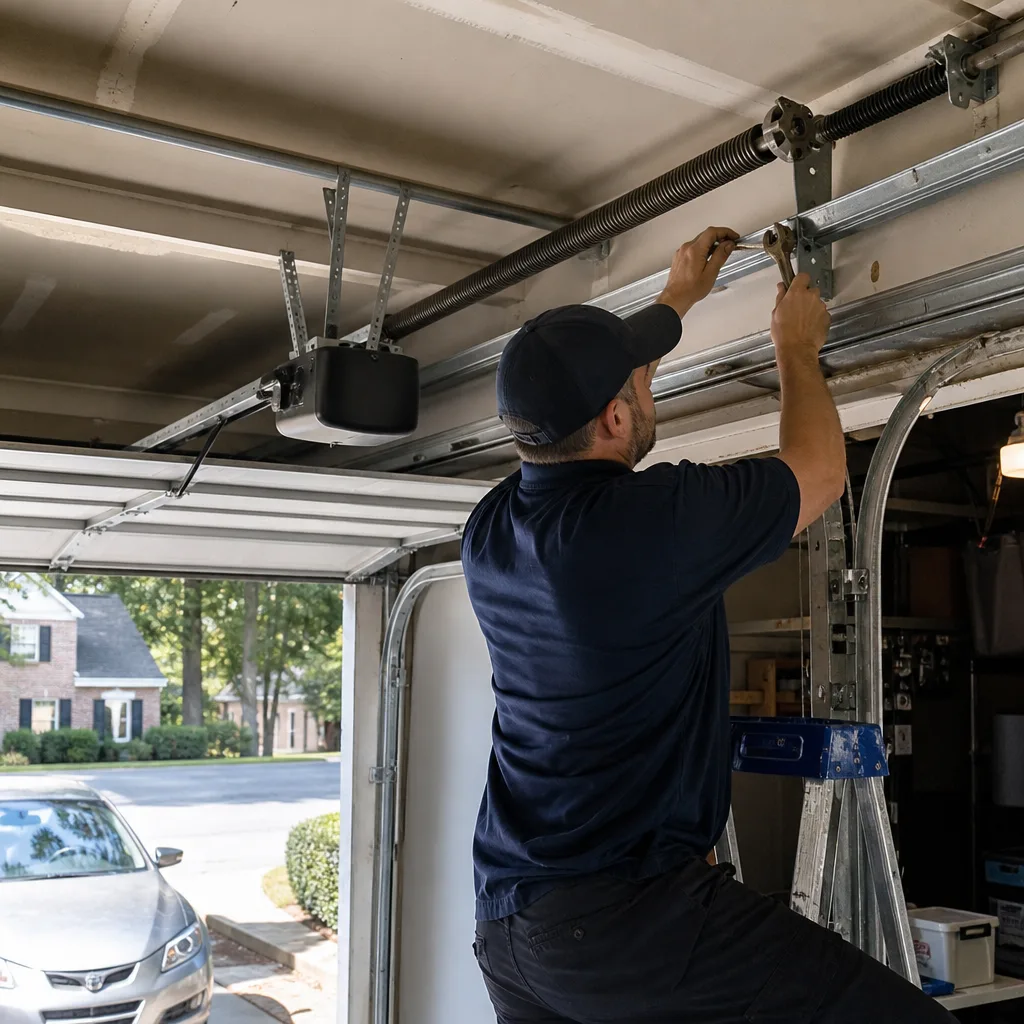 After
After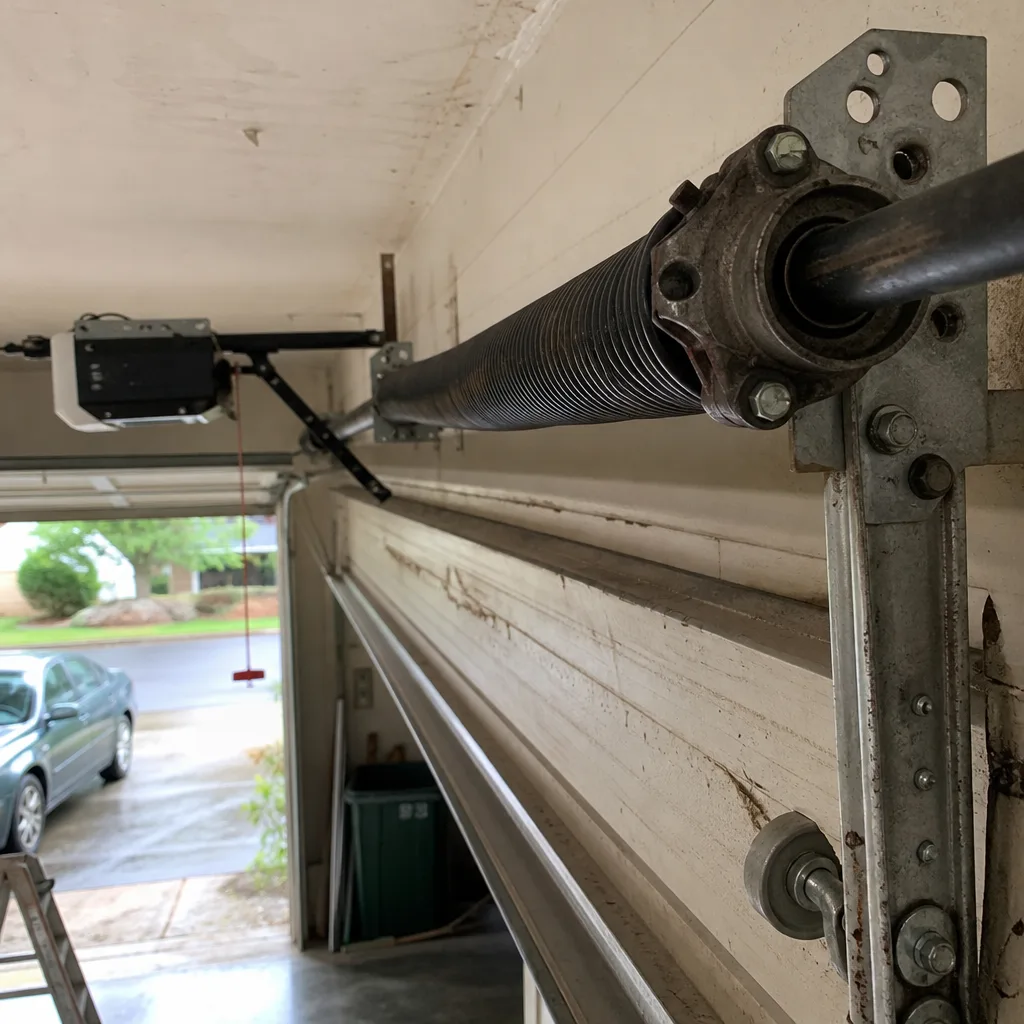 Before
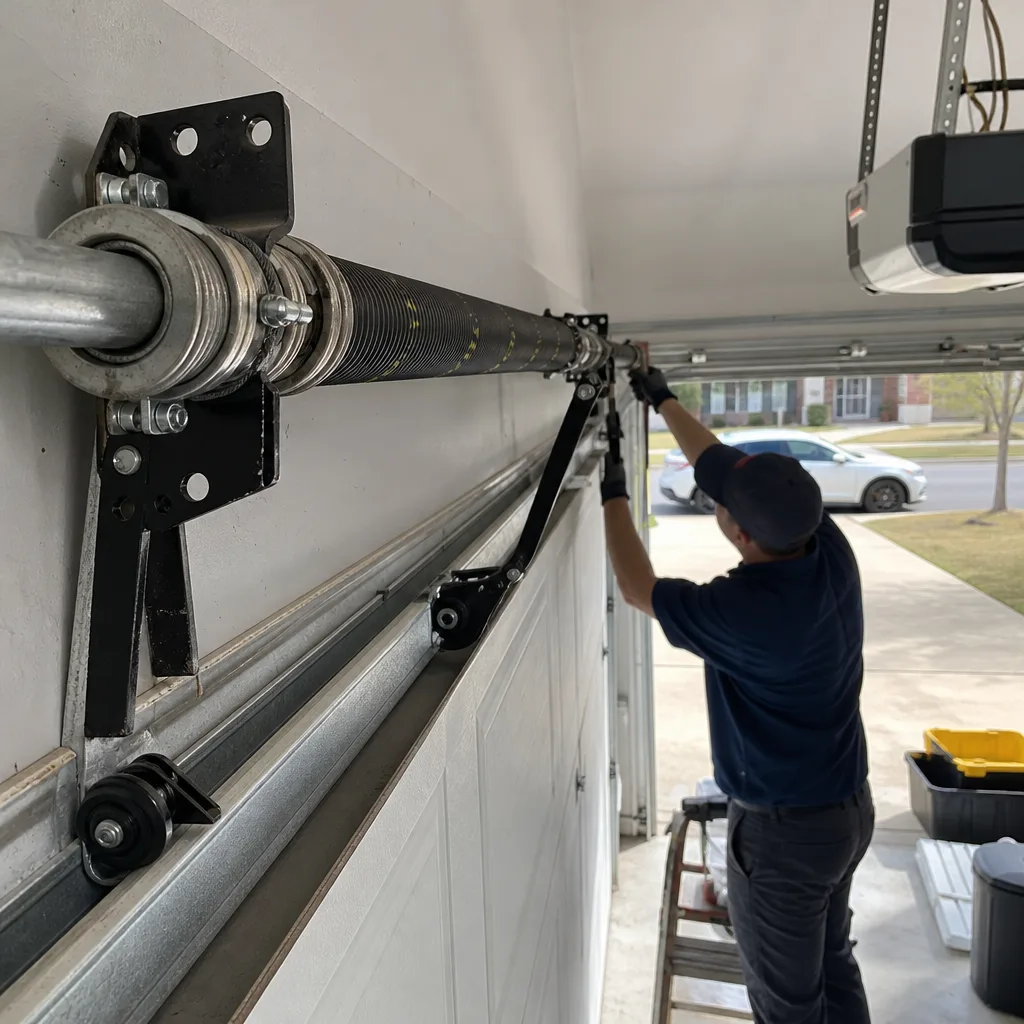 After
After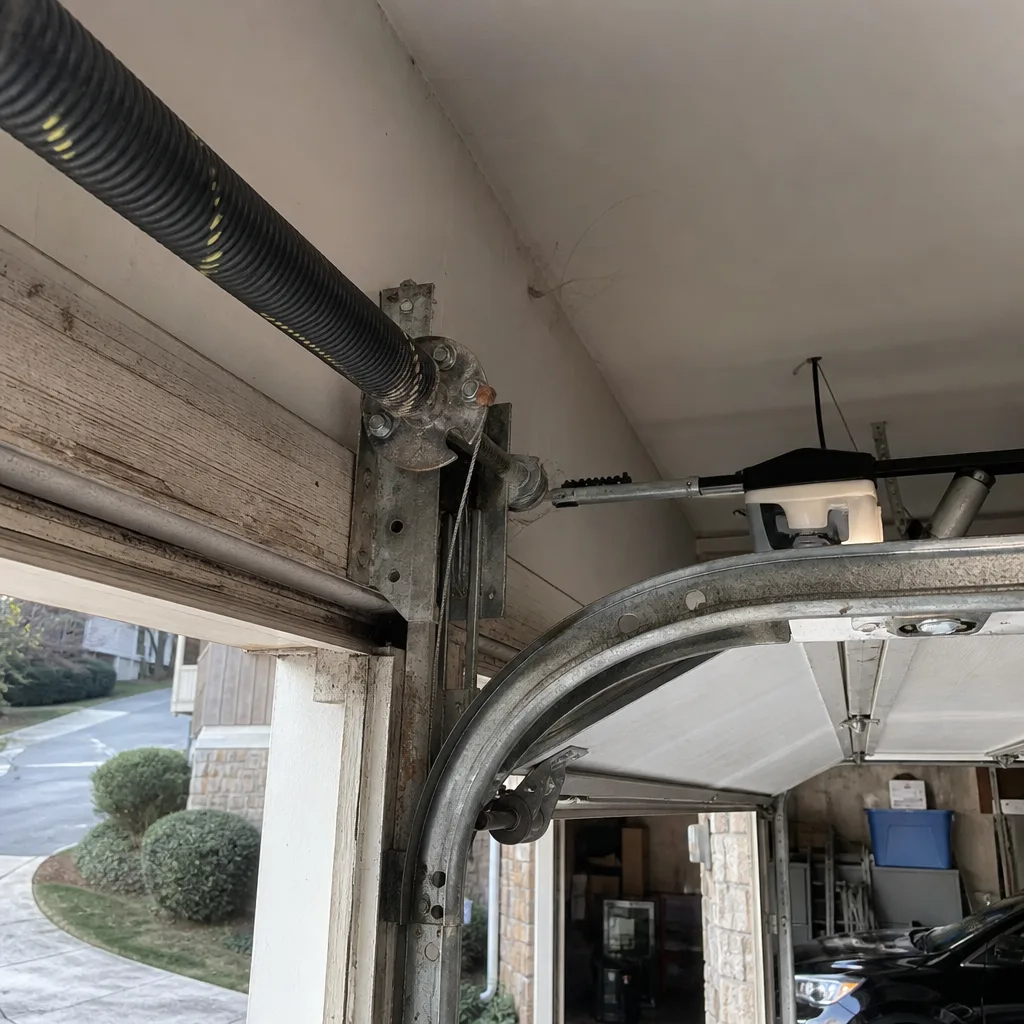 Before
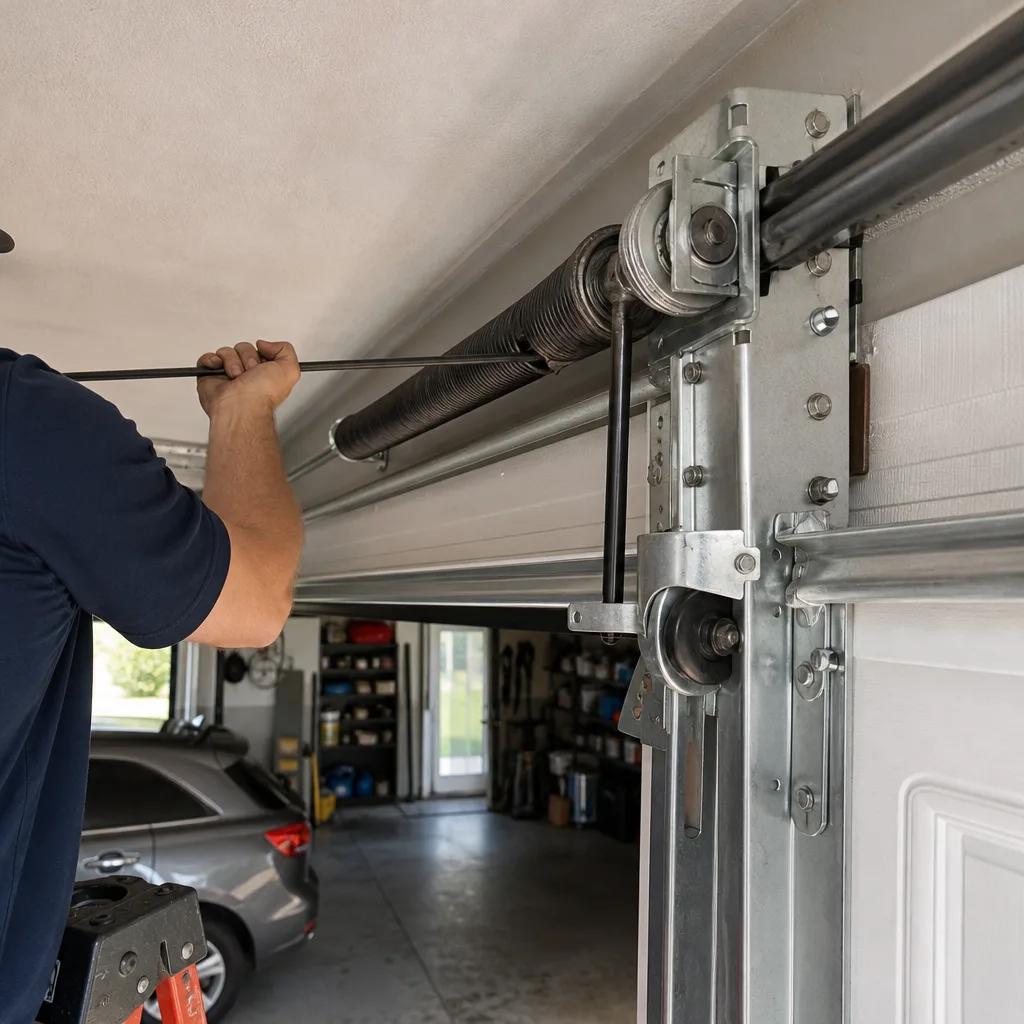 After
After